SEND facts
The SEND system in numbers
Understanding the scale and complexity of Special Educational Needs and Disabilities (SEND) in England can help explain why reform of the system is such a significant policy issue.
The figures below highlight some of the key facts about SEND support, education provision and the pressures facing schools and families.
Sources include Department for Education statistics, local authority SEND data, parliamentary publications and sector research.
Children with SEND in England
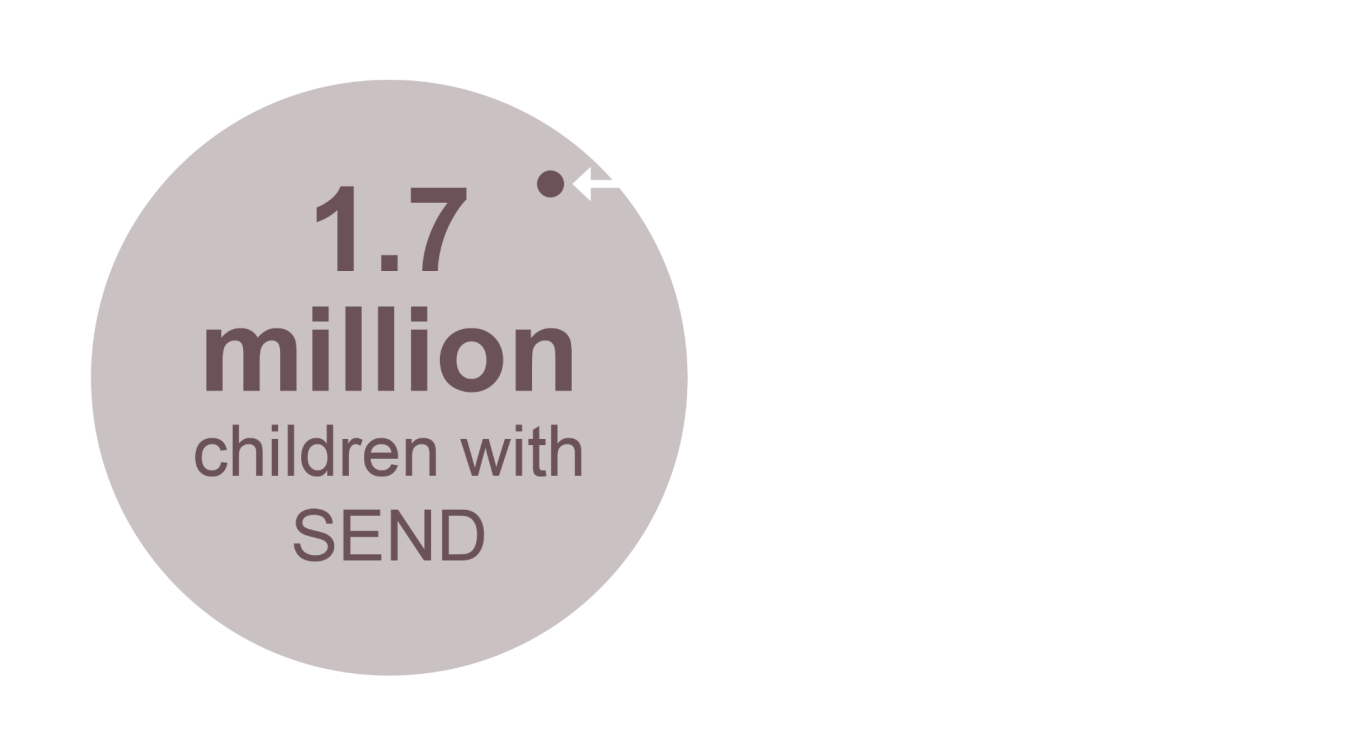
Approximately 1.7 million children and young people in England are identified as having Special Educational Needs and Disabilities.
These children have a wide range of needs, including learning difficulties, communication needs, physical disabilities and complex behavioural or medical conditions.
The vast majority are educated in mainstream schools, often with additional support.
Education, Health and Care Plans (EHCPs)
Around half a million children currently have an Education, Health and Care Plan.
EHCPs are designed for children whose needs require coordinated support across education, health and care services.
They set out the support a child requires and the educational setting best able to provide it.
Mainstream education
Most children with SEND attend mainstream schools, where support may include:
- teaching assistants or additional classroom support
- adapted teaching approaches
- access to specialist advice or therapies.
Mainstream schools play a central role in supporting children with SEND across the country.
Specialist provision
For a smaller group of children with highly complex needs, specialist schools provide education environments designed to deliver more intensive support.
These settings may include:
- specialist teaching staff
- therapeutic support
- highly structured environments
- tailored learning approaches.
For some children, specialist provision offers the stability and expertise required to support both learning and wellbeing.
Growing demand
Demand for SEND support has increased significantly over the past decade.
Schools, local authorities and families are navigating rising levels of need alongside pressures on funding, staffing and specialist services.
Understanding these pressures is an important part of the wider conversation about how the SEND system should develop in the future.
Why reform matters
The SEND system supports around 1.7 million children and young people in England. Most are educated in mainstream schools, while a much smaller number attend specialist settings designed to support highly complex needs.
As reforms are considered, understanding the scale of the system and the different forms of support available can help ensure that policy decisions reflect the realities faced by families and educators.